Learning Systems Architecture
Learning Systems for Sparse Signals, Variation, and Deployment
The central systems question in my work is not simply classification accuracy, but how models behave when the conditions under which they were trained no longer hold.
Across physiological sensing, textile-based interaction, and naturalistic behavioral modeling, I design representations and system architectures for signals that are limited, physically variable, and highly dependent on user and context, without relying on increased hardware complexity.
These systems demonstrate that robust inference is possible even with sparse sensing configurations, provided that models capture invariant temporal structures rather than relying on raw magnitude or high channel counts. Across these systems, the common concern is reliability under limited sensing, user variation, and deployment shift, with classification tasks also testing representation stability rather than only model performance.
What this page demonstrates:
- Minimal sensing with invariant representations
- Cross-subject generalization without calibration
- Deployment-aware temporal modeling
- Robustness under deformation, drift, and real-world interference
Why this matters beyond this domain:
These projects are grounded in textile sensing, physiology, and behavioral data, but the underlying systems problems are broader: how to build machine learning pipelines that remain reliable when inputs are noisy, sparse, heterogeneous, and limited by operational requirements. The same design patterns are relevant to industry ML work: modular experimentation, clean separation between upstream processing and downstream modeling, evaluation that respects operational constraints, and architectures designed for reuse, resilience, and deployability.
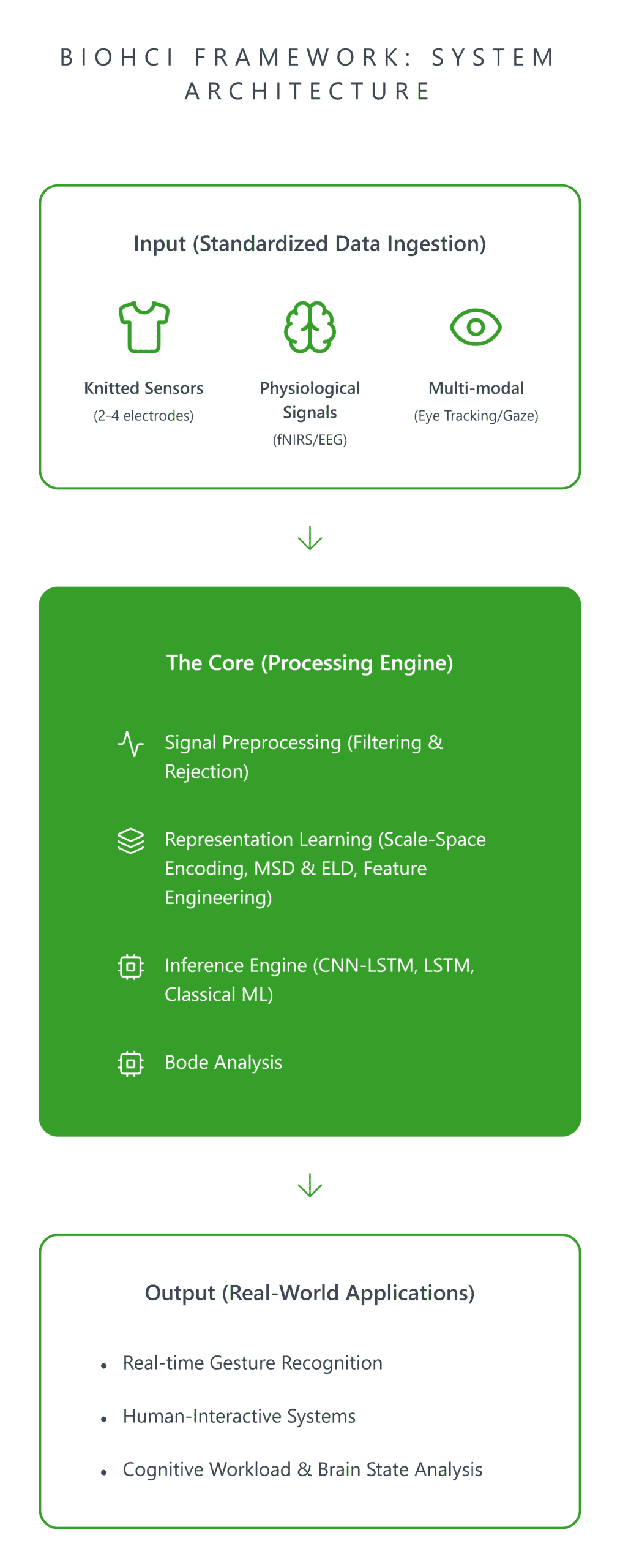
BioHCI: A Modular Framework for Real-World Sequential Learning
BioHCI is a 10,000+ line general-purpose time-series learning framework I built for machine learning on structured sequential data under variable data and deployment conditions. It evolved from my early fNIRS-based physiological modeling work through capacitive touch sensing pipelines into a unified architecture for structured human-generated signals.
It was designed to support reproducible experimentation across sensing modalities and is organized around a subject-centered data model, a configurable signal-processing pipeline, representation abstractions, and evaluation infrastructure built for real-world variability. Study-level configurations define dataset organization, segmentation strategy, feature construction, imbalance handling, fold setup, and model settings, enabling comparable experiments across users, tasks, and signal types.
BioHCI grew out of the infrastructure I needed for reproducible experimentation, sound evaluation, and rapid adaptation to new data sources, sensing setups, or deployment requirements.
System impact
BioHCI enabled the reuse of the majority of the experimental, representation, and evaluation pipeline across projects, so new work was typically concentrated in modality-specific preprocessing and task design rather than rebuilding the full system from scratch.
System Architecture
A central design principle of this system is decoupling. Upstream acquisition and low-level signal extraction can vary by hardware setup, while downstream preprocessing, representation learning, and evaluation share the same fundamental structure. In practice, this means the learning stack does not need to be rewritten around each device or sensing substrate. BioHCI is designed around multivariate signal inputs and experimental pipelines rather than an ingestion pipeline tied to a single device or hardware configuration, which makes it easier to reuse across projects with different instrumentation and implementation contexts.
The framework is also subject-centered by design. Data are organized around participant-level structure rather than treated as collections of independent windows, because segmented windows, adjacent measurements, and repeated observations from the same individual are not independent samples. This preserves subject-level evaluation integrity during segmentation and model selection and helps prevent leakage between training and test sets unless within-subject evaluation is explicitly intended.
At the architectural level, BioHCI separates the system into three interacting layers:
- Signal layer: preprocessing operations such as filtering, normalization, segmentation, and signal characterization
- Representation layer: feature construction, temporal encoding, and interfaces for deterministic and learned models
- Application layer: task-specific inference, such as localization, gesture recognition, user identification, or behavioral analysis
This separation creates clear system interfaces while allowing representation and evaluation logic to be reused across tasks with different sensing limitations and downstream goals. The same infrastructure supports offline experimentation, benchmark comparison, and downstream inference workflows while producing comparable artifacts across studies.
This kind of layered, subject-aware architecture is broadly useful in machine learning systems where clean interfaces, evaluation integrity, and reuse across changing data conditions matter as much as model choice itself.
Core design patterns
- Layered architecture separating acquisition, representation, and application logic
- Subject-centered data abstractions that preserve valid separation between training and test data
- Modular preprocessing and representation components reusable across studies
- Decoupled offline training and downstream inference workflows
- Structured-input interfaces that avoid tight coupling to any single acquisition stack
Minimal Sensing as a System Design Principle
Many real-world learning systems cannot rely on dense, high-resolution sensing. Instead, they must operate under limited channel counts, lightweight substrates, low-profile hardware, and restricted observability, often by design rather than by accident. Across physiological sensing, textile interaction, and behavioral modeling, my work asks how much reliable inference can be recovered from such constrained signals without simply adding hardware complexity. Rather than compensating with denser instrumentation, I shift the burden into representation and modeling by:
- extracting stable structure from sparse signals,
- designing representations that remain resilient to noise and drift,
- and building learning pipelines tailored to limited observability.
These domains differ in modality, but they share a common systems property: low-dimensional, temporally evolving signals that must support inference under substantial real-world variability. The following sections show how sparse sensing shaped the end-to-end design of the knitted capacitive sensing platform, from hardware configuration to representation learning, deployment, and robustness evaluation.
Production ML systems face a parallel problem: they often need to operate under incomplete, low-resolution, or operationally constrained inputs, so success depends on representation and pipeline design rather than simply collecting denser data.
Hardware Limitations as System-Level Design Drivers
This work was conducted in close collaboration with Richard Vallett, who led circuit design and signal acquisition hardware development. My primary contributions were the modeling pipeline, post-acquisition signal processing, machine learning architecture, and experimental evaluation.
Real-world sensing systems rarely operate with dense instrumentation. Instead, they must balance sensing simplicity, signal richness, and computational feasibility. In this work, hardware limitations were treated as design requirements from the beginning rather than downstream implementation details.
Two knitted sensor configurations illustrate this tradeoff clearly: a 2-electrode design optimized for minimal hardware and touch localization, and a 4-electrode design that modestly increases spatial observability to support more complex gesture recognition. Both systems use a single conductive yarn sensing element with few external connections, but they differ in spatial observability, signal structure, and modeling requirements.
2-Electrode Optimization – Minimal Hardware Strategy
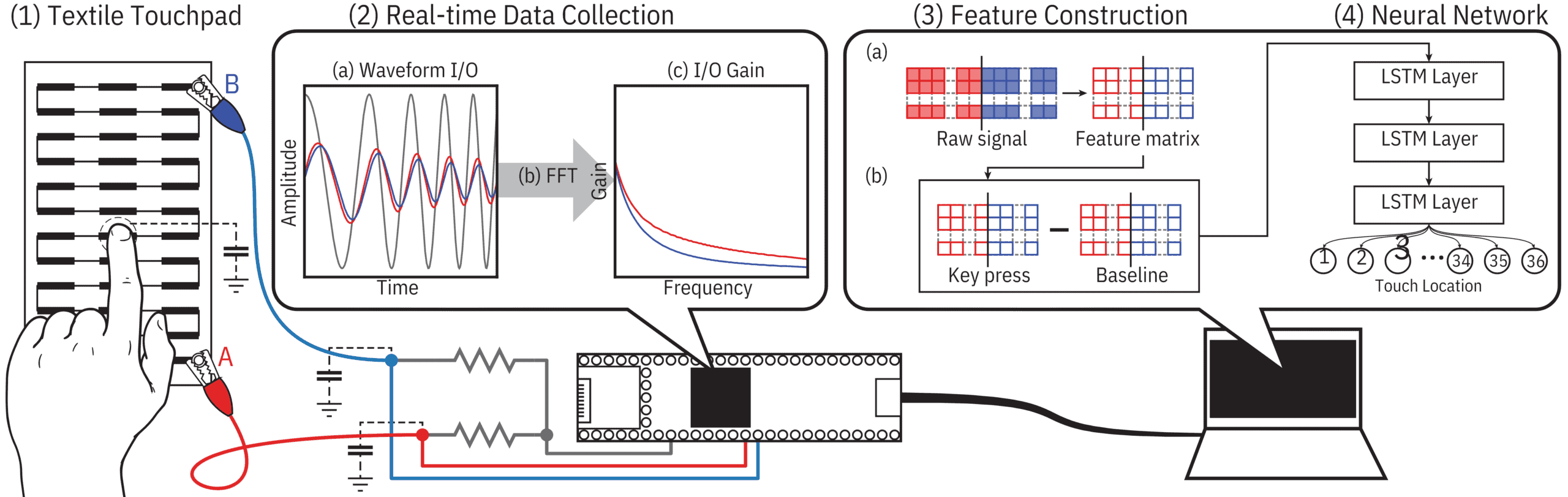
The first configuration used a single-wire touch surface constructed from conductive and non-conductive yarns arranged in a serpentine pattern across the textile substrate, with only two external connection points. This design prioritizes hardware simplicity and minimal wiring while preserving usable spatial information through representation and modeling. Key design choices included:
- Temporal windowing and statistical feature construction over multi-frequency gain values to enhance spatial signal separability
- LSTM-based discrete localization to infer touch location from limited observability
The objective was to maintain spatial inference capability despite severe sensing observability limits. This configuration is well-suited for touch location identification and simple gesture discrimination, but its non-uniform output between adjacent points and sparse sensing structure reduce contact continuity during complex gesture trajectories. This limitation directly motivated the 4-electrode design.
Signal Acquisition & Integration
- Embedded signal generation and acquisition via NXP Kinetis MK66 ARM Cortex-M4F 180 MHz microprocessor
- Frequency sweep across 96 frequencies between 2,000 Hz and 26,000 Hz for Bode characterization
- Two 16-bit ADCs sampling at 256k samples/second in 1024-point increments
- Hardware-in-the-loop operation at 125 Hz with USB data transfer to processing pipeline
4-Electrode Scaling – Complex Interaction Strategy
The non-uniformity and contact continuity limitations of the serpentine design motivated an architectural evolution: a planar conductive sensing surface with four external connection points, producing a more uniform resistance gradient in all directions. This modest increase in hardware complexity improved spatial observability without moving to a dense sensing grid, employing a richer spatial-temporal modeling strategy based on a CNN-LSTM architecture. Key design principles include:
- Preserving a low-profile sensing footprint
- Increasing structured spatial information through limited hardware scaling
- Leveraging learned spatial–temporal representations rather than dense instrumentation
This configuration supports more complex gesture recognition while remaining within practical hardware limits.
In industry settings, the same principle appears whenever model design must be shaped by upstream system requirements such as latency, observability, instrumentation cost, or deployment footprint.
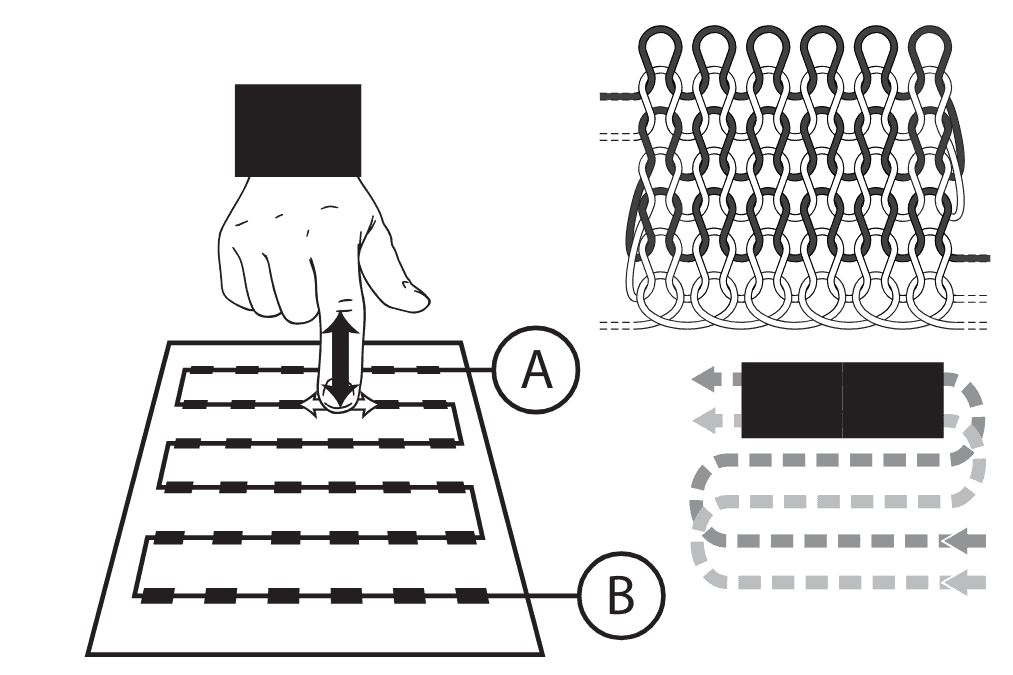
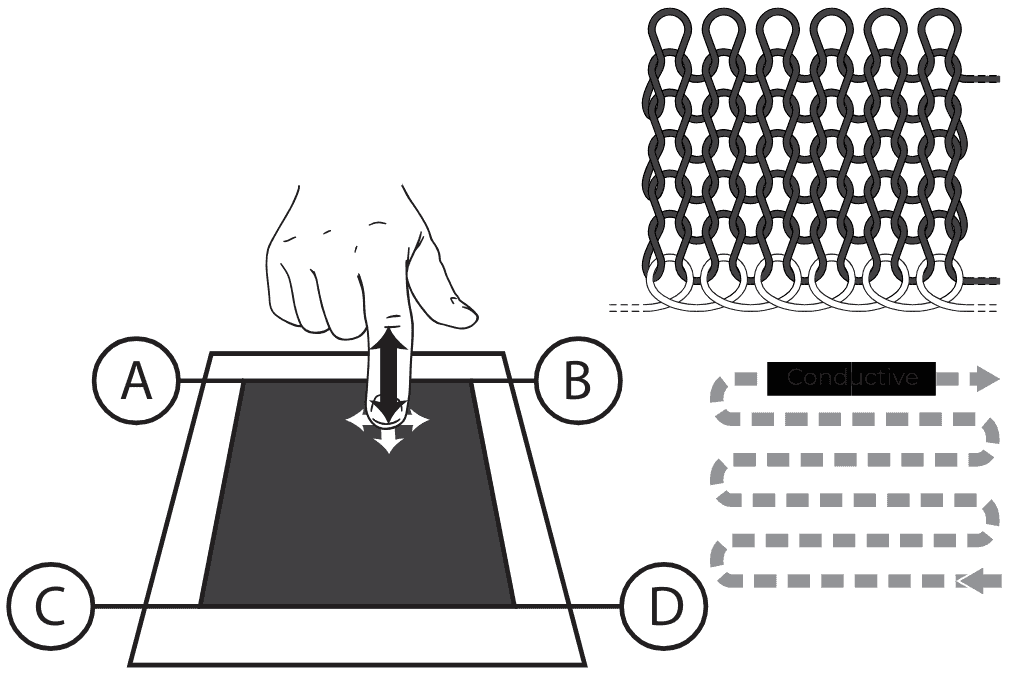
Diagrams of textile sensors. Left: A single-wire touchpad created using conductive and non-conductive yarns that serpentine across the textile surface. The points A and B connect to external sensing hardware. Right: Touchpad created as a planar conductive area with four connection points, A, B, C and D. From McDonald et al. (arXiv preprint 2023). Figure from Richard Vallett, Center for Functional Fabrics, Drexel University.
Signal Acquisition & Integration
- Signal generation and acquisition via bench equipment: Keysight 33622A arbitrary waveform generator and Keysight MSO-X-3024T oscilloscope
- 2 MHz sine wave input; gesture data captured at 250 frames per second over a 1-second window
- Each frame processed via Bode analysis to extract magnitude gain across four measurement channels, producing 250×4 input arrays
- Embedded acquisition is a planned next step; the current bench setup defines the present deployment setting.
Signal Processing & Representation Pipeline
Real-world signals from physical substrates are noisy, multi-channel, and sensitive to environmental and hardware variability. BioHCI processes structured gain data through a configurable signal pipeline that separates preprocessing, representation construction, and downstream modeling. The exact operations vary by study, but the broader goal is consistent: transform unstable raw measurements into representations that preserve task-relevant structure while remaining usable across subjects and sensing conditions.
BioHCI receives preprocessed Bode gain files as input; signal acquisition and frequency-domain extraction are handled by the external hardware pipeline described above. Data remain organized at the subject level throughout preprocessing so that segmentation and representation construction preserve partitioning logic. From there, preprocessing and representation steps are selected per study from a shared set of configurable operations.
Preprocessing
The preprocessing stage standardizes raw gain inputs before temporal modeling. Depending on the sensing substrate and study design, this stage includes:
- chunking and windowing into fixed-length temporal segments, with configurable size and overlap
- baseline subtraction to remove constant signal components and emphasize interaction-specific structure
- noise filtering through Butterworth or wavelet-based methods depending on substrate characteristics
Representation Construction
Representation strategy is selected based on signal complexity and modeling approach:
- Statistical feature construction: compact statistical summaries extracted over multi-frequency gain values within sliding temporal windows. This approach was used in the 2-electrode pipeline and in earlier physiological modeling work, where lightweight representations were important for stable inference under limited sensing and for deployment-conscious modeling.
- Wavelet-filtered direct model input: filtered multi-channel signals provided directly to temporal models after wavelet reconstruction. This approach was used in the 4-electrode gesture pipeline, where richer spatial-temporal structure made learned representations more effective than hand-crafted summaries.
- General-purpose representation modules: the framework also includes custom modules such as Mixed-Source Description (MSD) and Euclidean Levenshtein Distance (ELD), developed as part of this research for structured sequential signals. These are described in more detail on the Research page.
Imbalance Handling
Where appropriate, training distributions are adjusted through configurable within-subject oversampling. This supports more consistent optimization under skewed class frequencies while preserving subject-level separation.
This modular preprocessing-to-representation structure is important in applied ML and ML engineering, where stable interfaces between data transformation, feature construction, and modeling make systems easier to debug, compare, and extend.
Temporal Modeling & Zero-Calibration Inference
On top of structured signal representations, I implemented temporal deep learning models for touch location identification and gesture recognition across both sensor configurations. Across both systems, classification accuracy measures performance, but it also tests whether the representation captures structure that generalizes beyond individual subjects or recording conditions.
Modeling Architecture
2-Electrode System — Touch Location Identification
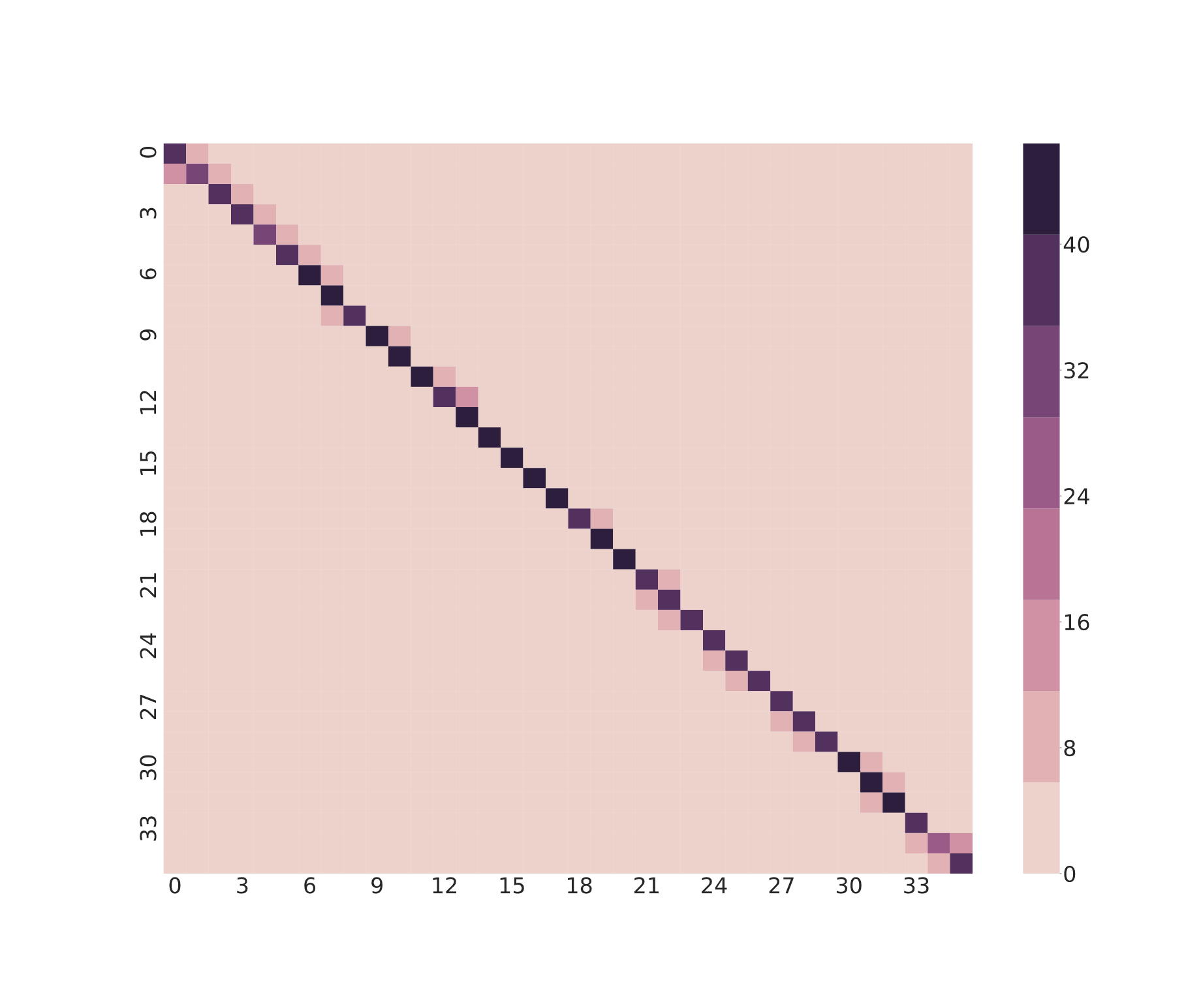
An LSTM-based architecture was trained to classify touch location across 36 buttons on the knitted touchpad. The model receives statistical features constructed over multi-frequency gain values as input: 92 frequency gains extracted via Bode analysis, processed into a 250×16 representation per key-press. The temporal architecture was chosen to preserve sequential dependencies across the key-press signal.
Two benchmarks confirm both design choices were necessary: using single-frequency raw input instead of multi-frequency features reduced accuracy to 25.3% (vs 58.3%), while replacing LSTM with a non-temporal MLP reduced accuracy to 46.3%, demonstrating that both multi-frequency feature construction and temporal modeling contributed independently to performance.
4-Electrode System — Gesture Recognition
For the 4-electrode system, I trained a CNN-LSTM architecture to classify 12 complex gesture classes, corresponding to a subset of English language characters. The CNN component captures local spatial structure across the four measurement channels, while the LSTM models temporal dependencies across the 250-frame gesture sequence.
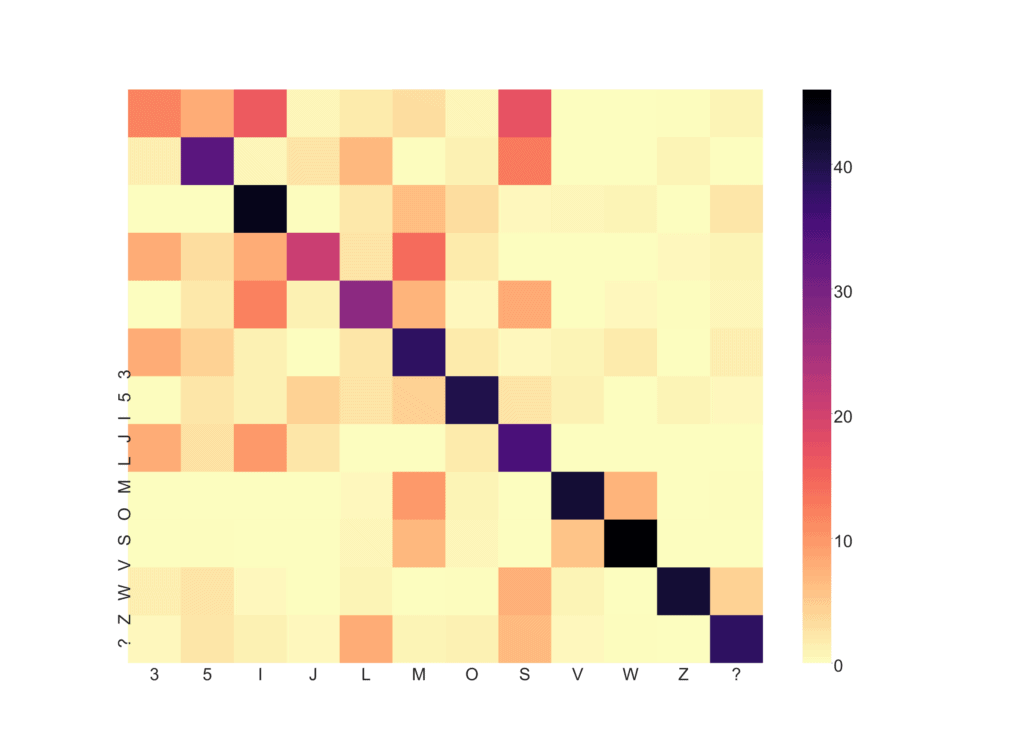
An architectural benchmark confirms that this combination was necessary. The CNN-LSTM achieved 89.8% held-out evaluation accuracy, compared with 52.5% for a standalone LSTM trained on the same data, a 37-point gap, showing that spatial feature extraction across the four channels is essential when sensing input is limited. Full benchmark analysis is described on the Research page.
Cross-Subject Generalization: Zero-Calibration Results
Both systems were evaluated under subject-independent conditions with no per-subject calibration. This was a deliberate design decision: calibration would be expected to increase accuracy, but requiring it makes multi-user interaction intrusive and limits real-world scalability. All subjects in held-out evaluation contributed zero data to training.
Across both systems, performance on completely unseen subjects matched or exceeded cross-validation accuracy, indicating reliable zero-calibration generalization rather than overfitting to the training participants.
| System | Condition | Subjects | Accuracy | Chance |
| 2-Electrode | Cross-validation (10-fold) | 24 subjects | 58.3% | 2.78% |
| 2-Electrode | Held-out evaluation | 7 new subjects | 66.2% | 2.78% |
| 4-Electrode | Cross-validation (LOO) | 5 subjects | 78.6% | 8.3% |
| 4-Electrode | Held-out evaluation | 3 new subjects | 89.8% | 8.3% |
The improvement from cross-validation to held-out evaluation in both systems indicates model stability rather than subject memorization. For the 2-electrode system, 66.2% represents a 23x improvement over chance across 36 classes. For the 4-electrode system, 89.8% represents an 11x improvement over chance across 12 classes. The fact that this pattern appears in two different sensing architectures, on different datasets and tasks, strengthens the case that the modeling approach generalizes beyond any single experimental setup.
More generally, this illustrates my evaluation strategy in production-facing ML: performance matters, but so does whether a model generalizes to genuinely new users or conditions without hidden adaptation requirements.
Deployment Architecture: Online & Offline Learning Pipelines
This work was produced in collaboration with Lev Saunders and Richard Vallett.
The gesture recognition system was developed with deployment feasibility as a design requirement rather than an afterthought. Model architecture, preprocessing structure, and execution flow were organized to support inference on embedded hardware with limited computational resources.
Training was performed offline on a multi-GPU Ubuntu workstation, after which the CNN-LSTM model was deployed to an NVIDIA Jetson Xavier NX to validate embedded inference capability. This demonstrated that the modeling and preprocessing pipeline could be separated cleanly from training and executed on compact GPU-enabled hardware with limited computational power.
Signal acquisition and preprocessing remained tied to bench equipment in the current implementation scope, using a Keysight 33622A arbitrary waveform generator and oscilloscope. The deployed inference pathway operated on structured gesture windows stored as signal files. Before classification, baseline subtraction and waveform filtering were applied to normalize inputs and preserve representational stability under hardware variability.
The deployed system classified inputs into one of 12 gesture categories using the trained temporal model, with an average response time of 30 ms1, a practical latency for inference in a real-time system2. Separation was maintained between offline training and inference execution. The training pipeline handled data preprocessing and model optimization, while the deployed inference pathway operated independently on preprocessed inputs. This separation supports modularity, reproducibility, and a clear transition from experimental pipeline to deployable interaction system.
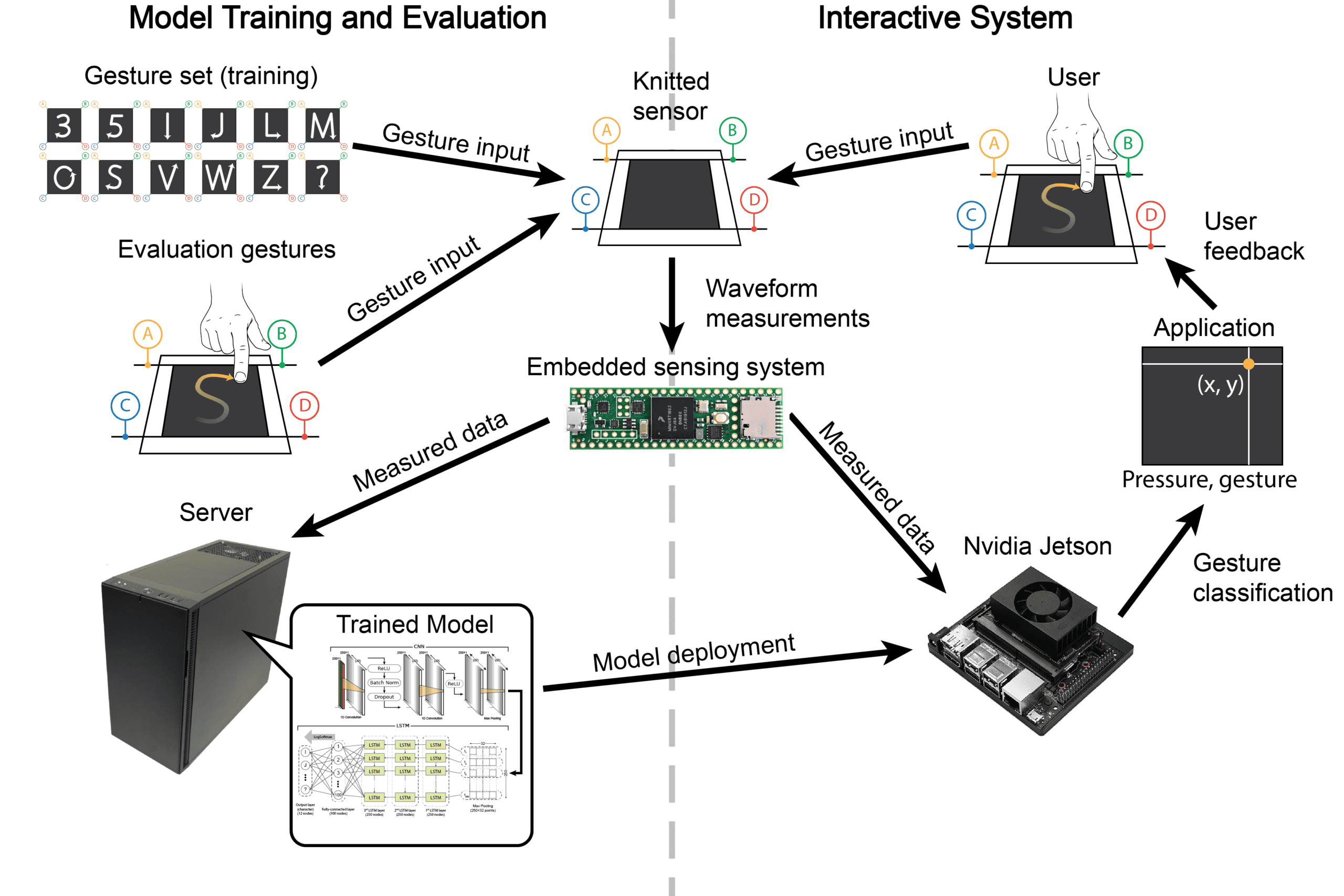
Although the current deployment operates on pre-segmented gesture windows, the architecture was intentionally structured to support future transition toward continuous streaming classification. Extending the system to real-time operation would require:
- Sustained signal acquisition and preprocessing on embedded hardware
- Online gesture-window segmentation upstream of the classifier, potentially using a new model to determine gesture boundaries
Importantly, the deployed CNN–LSTM inference pipeline demonstrated compatibility with the ARM + Volta GPU architecture of the Jetson platform, validating that structured temporal modeling can operate within compact edge environments. This deployment exercise reinforces a broader systems principle: modeling for complex interaction must account not only for representational quality, but also for limited instrumentation, modularity, and inference feasibility under realistic hardware conditions.
This maps naturally to ML systems work where training, preprocessing, and inference must be cleanly separated so models can be iterated on independently of the surrounding execution environment.
Robustness and System Resilience Outside the Laboratory
This work was produced in collaboration with Richard Vallett.
Interactive textile systems operate under conditions that differ substantially from laboratory settings, including on-body deformation, mechanical stretching, laundering-induced drift, environmental electromagnetic interference, and incidental contact. Unless otherwise noted, all robustness conditions were evaluated zero-shot on trained models with no retraining: the same models trained under controlled laboratory settings were applied directly to each new condition.
On-Body Deployment: Physical Distribution Shift
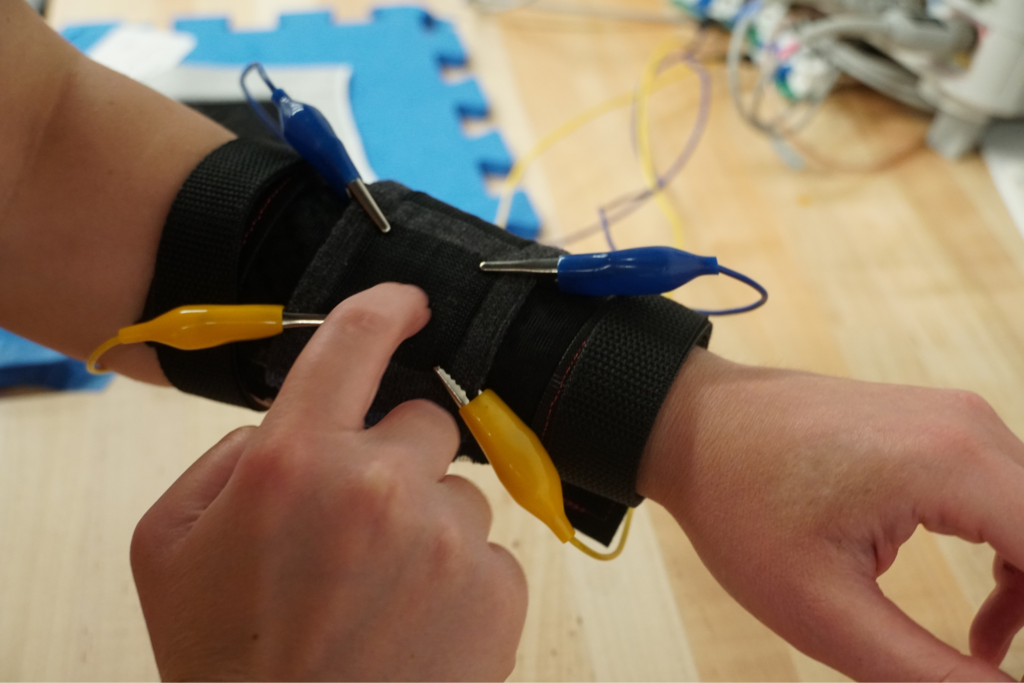
When worn on the body, the sensor experiences curvature, non-uniform pressure, motion artifacts, and parasitic coupling effects that alter signal statistics relative to controlled bench-top recordings. Under these conditions, the 4-electrode gesture model maintained 58.0% accuracy compared with an 8.3% chance baseline, despite no on-body training data. For context, controlled evaluation achieved 89.8% accuracy in McDonald et al. (arXiv preprint 2023). This shows that the learned representations retain meaningful gesture structure under substantial physical distribution shift, even though confidence is reduced relative to the laboratory setting. Incorporating on-body samples during training would be expected to improve performance further, but even without adaptation the model remained well above chance.
Structural Drift: Washing and Drying
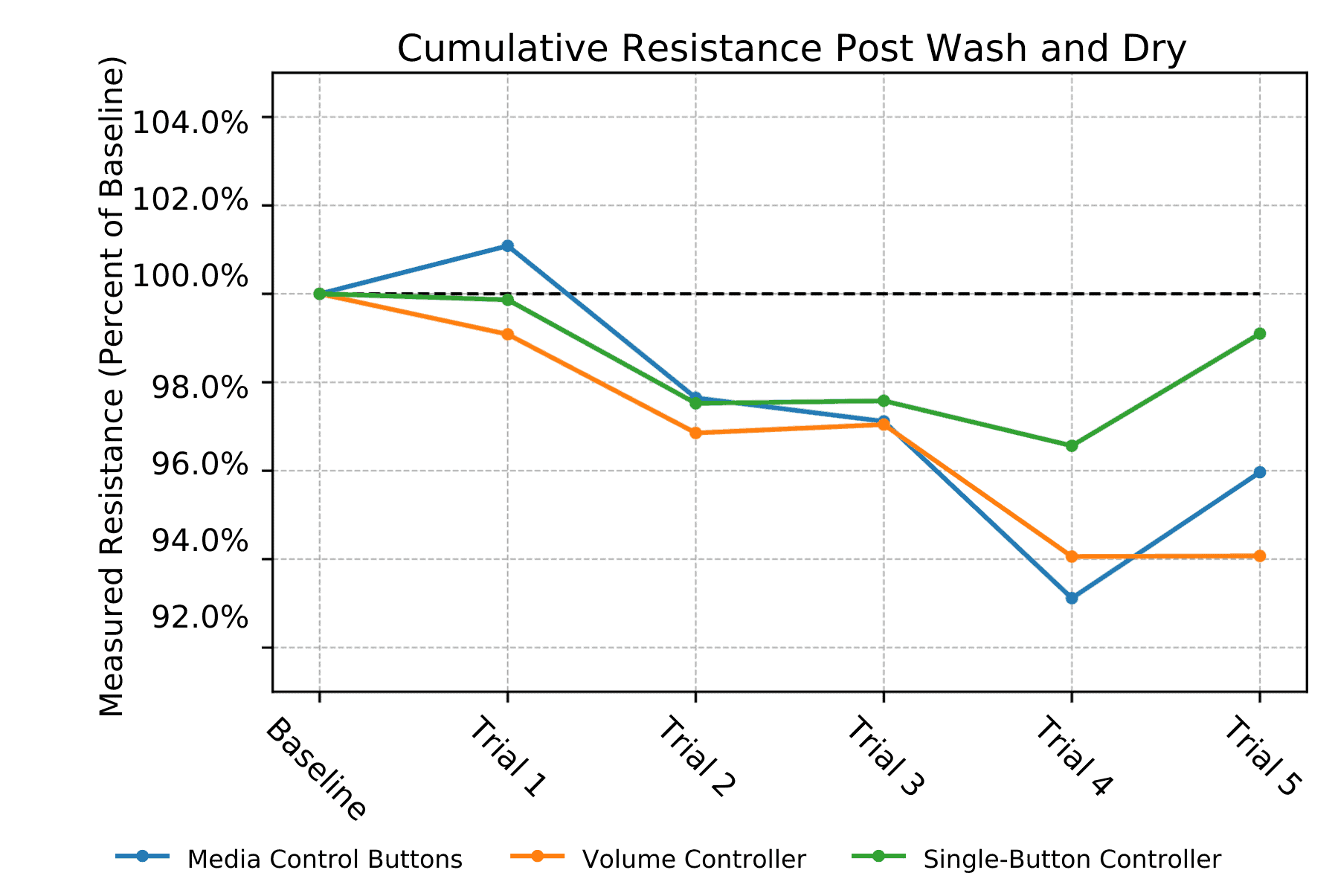
Repeated laundering changes the electrical characteristics of conductive textile structures, but the observed drift remained bounded rather than catastrophic. In the 2-electrode sensor patterns, resistance stayed within 7% of baseline after five wash cycles (McDonald et al. (CHI 2022)). In the 4-electrode configuration, variation across connection pairs ranged from 1% to 31%, again indicating structured change rather than failure (McDonald et al. (arXiv 2023)). From a systems perspective, this means the challenge is not random noise but baseline drift: models should depend less on absolute magnitude and more on relative or structured signal properties. The sensing substrate remained functional across all cycles, supporting viability under everyday textile care, though the direct impact of laundering-induced drift on model accuracy remains an open evaluation question.
Stretching
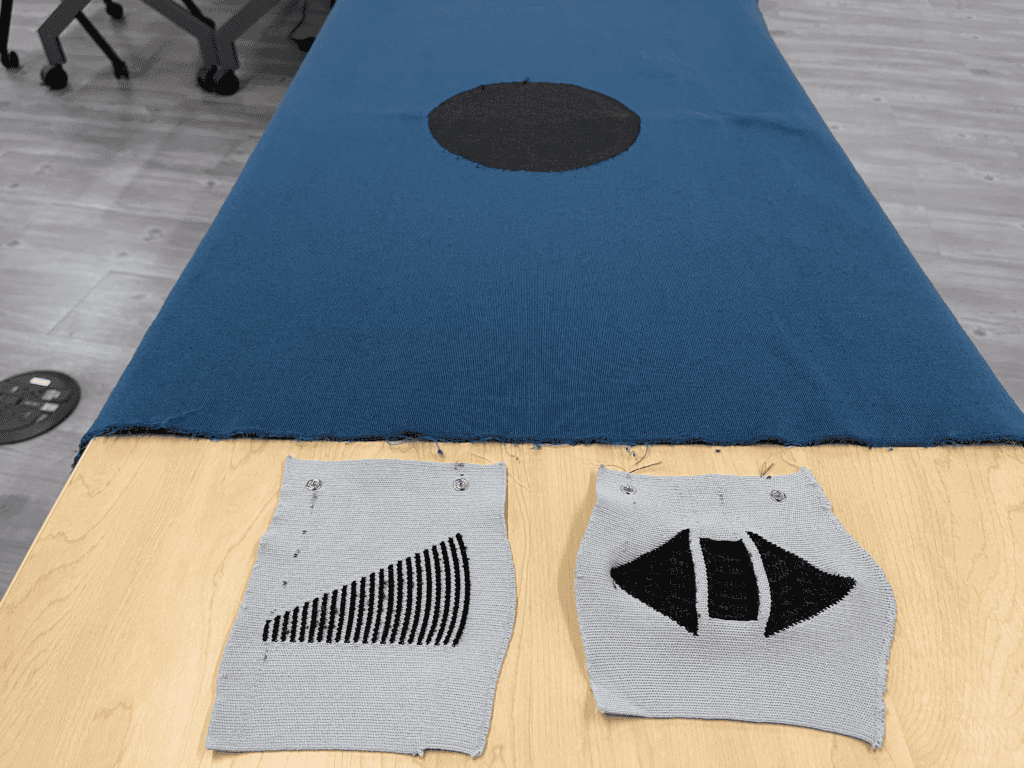
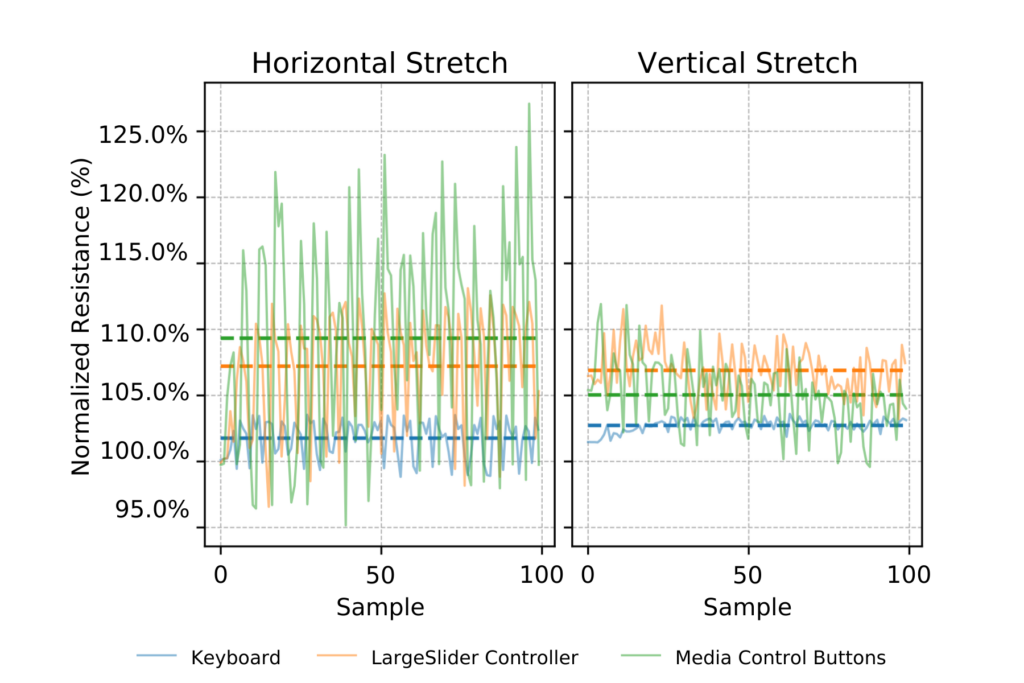
Horizontal and vertical stretching modifies conductive pathway geometry, altering the resistance distribution between touch locations. Stretching was characterized at two levels: hardware behavior across sensor designs, and inference accuracy on a deployed model, using different experimental setups that should be read as complementary rather than directly comparable.
Hardware characterization: resistance under deformation
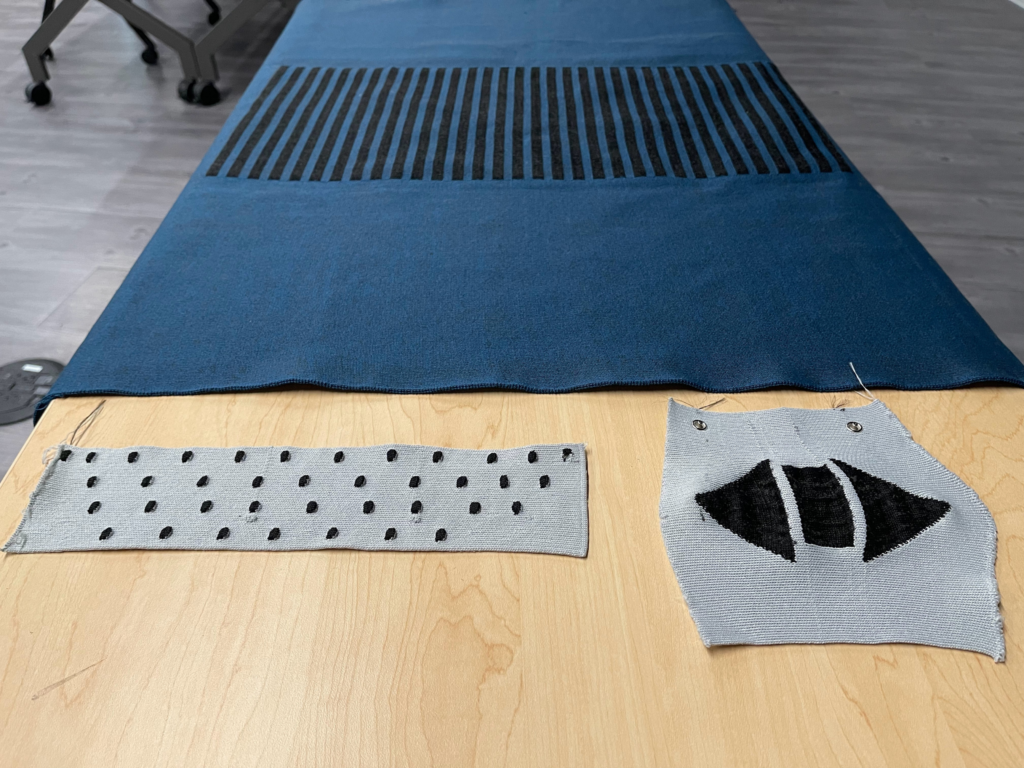
Horizontal and vertical stretching modifies conductive pathway geometry, altering the resistance distribution across the sensing surface. Three 2-electrode sensor designs were tested, the Keyboard, the Media Control Buttons, and the Slider Controller, each with different conductive yarn routing patterns that produce different resistance distributions and localization strategies. The figure below shows resistance values across 100 consecutive stretch samples for each design, with the signal fluctuating during active stretch and partially recovering, producing structured rather than random variation. The degree of impact depends on the sensor’s localization strategy. The Slider Controller, which measures continuous change along the full length of the circuit, is more tolerant of resistance shifts than the Keyboard, which requires precise resistance separation between discrete button locations.
Inference under stretching: model accuracy
To evaluate the impact of stretching on the trained touch location identification model, data were collected from subjects interacting with the sensor while it was being actively stretched. This was evaluated zero-shot on the trained 2-electrode LSTM model with no retraining under stretching conditions. Accuracy dropped to 37.2% from the 58.3% cross-validation baseline, which is a significant degradation directly attributable to the resistance shifts characterized above, which alter the effective location of individual buttons and disrupt the spatial separability the model relies on. Training under stretching conditions would be expected to recover substantial accuracy. This result identifies a clear deployment limitation: the current model is not robust to significant mechanical deformation without retraining (McDonald et al. (IMWUT/UbiComp 2021)).
Electromagnetic Interference (EMI)
Conductive textile traces can act as long antennas and are susceptible to environmental electromagnetic interference. EMI introduces low-amplitude fluctuations and transient artifacts that distort the measured waveform. By capturing signal strength across multiple frequencies via Bode analysis, the system retains separability between touch locations even under interference conditions. Evaluated zero-shot under EMI from a fluorescent lamp at 12-18 inches, the model achieved 79.5% accuracy, exceeding the 58.3% cross-validation baseline and indicating no measurable degradation from electromagnetic interference (McDonald et al. IMWUT/UbiComp 2021).
Incidental Contact
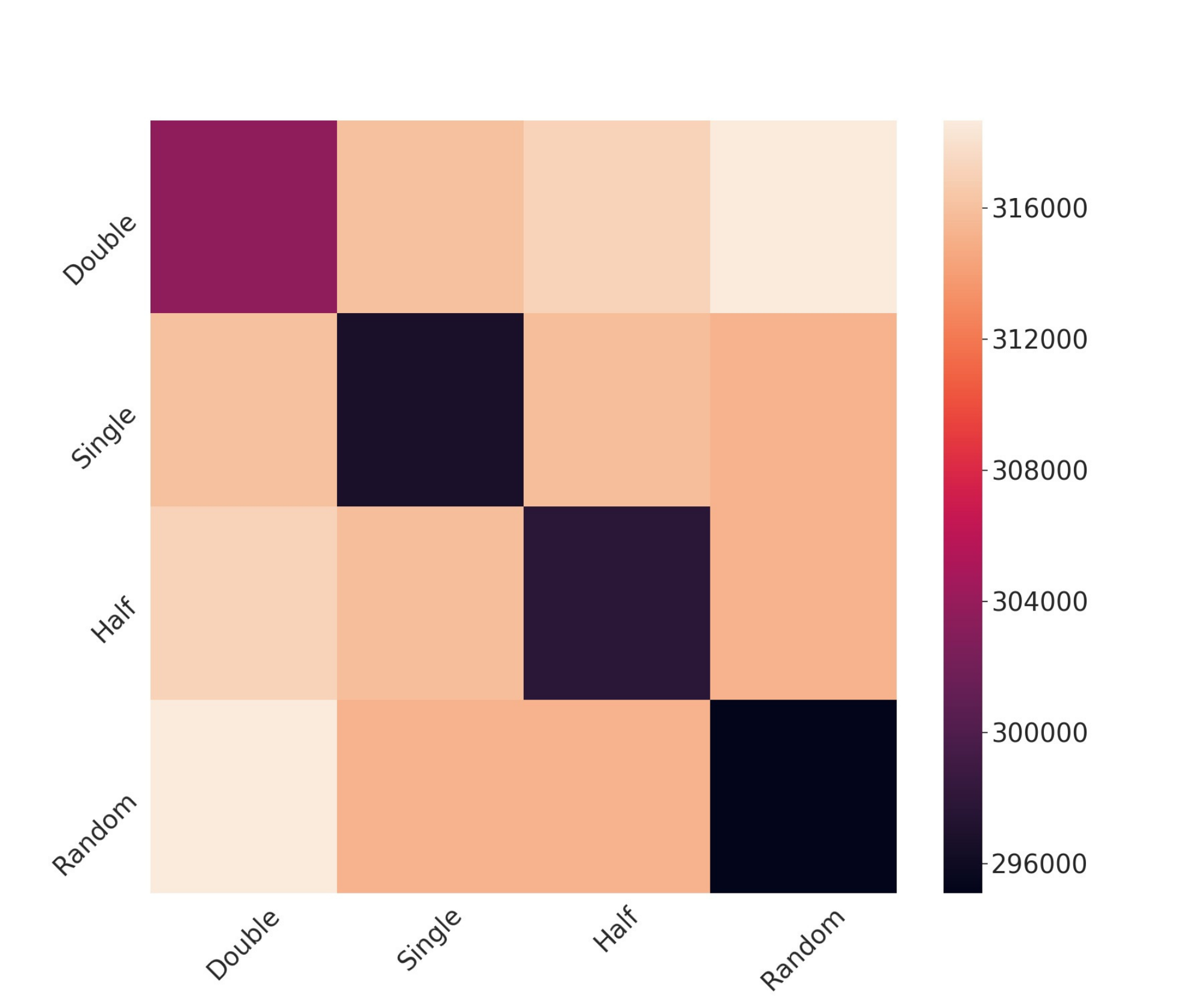
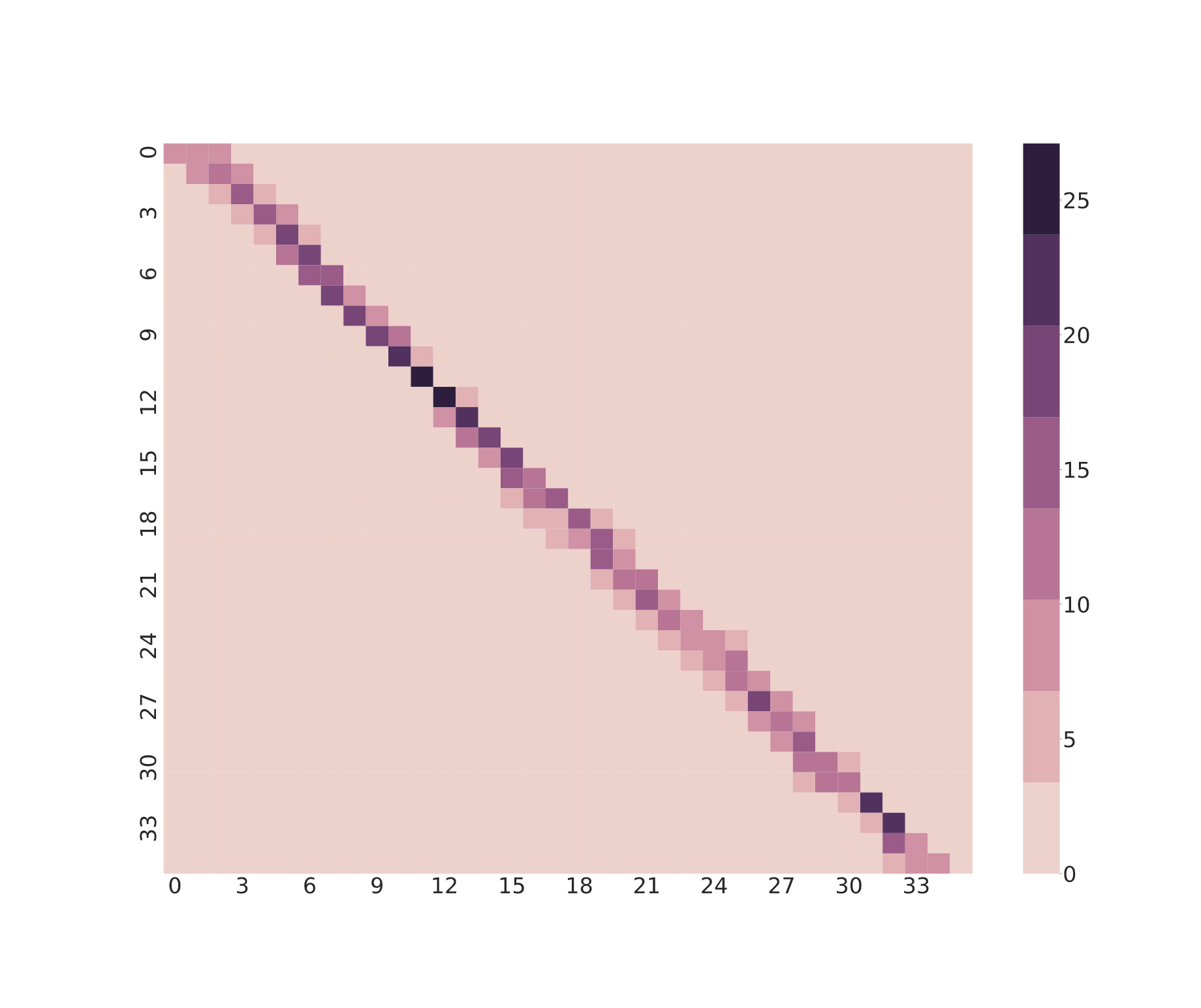
Everyday interaction includes accidental touch. Using ELD as a similarity metric across gesture samples from 12 participants, intentional gestures — full swipe, half swipe, double swipe — remained separable from incidental contact with strong statistical significance (f-statistic 231.81, p = 0.00).
The resulting similarity structure shows that intentional gestures cluster together while random contact forms a distinct class. This is important not only as a signal-processing result, but as a human-centered modeling one: practical interactive systems must distinguish deliberate interaction from unstructured perturbation.
For industry roles, the broader relevance is stability under distribution shift: testing whether a system remains useful when the input process changes, rather than assuming laboratory conditions persist in deployment.
Systems Perspective
Across these projects, the central systems challenge is not simply classification from sensor data, but designing representations and learning pipelines that remain useful under sparse sensing, physical variability, and limited hardware. The knitted sensing platform is one concrete instance of that broader problem: extracting generalizable structure from low-dimensional, temporally evolving signals while separating task-relevant information from noise introduced by users, substrates, and operating conditions.
What ties my work together is a consistent design philosophy: treating limited sensing inputs as part of the learning problem, enforcing valid experimental boundaries during evaluation, and building representations that generalize beyond controlled settings. In practice, this philosophy is applied by organizing data around subject-level structure, preserving cross-subject evaluation integrity, adapting modeling choices to observability limits, and testing performance under deformation, drift, interference, and other conditions expected outside the laboratory.
Taken together, these components show how I design learning systems that remain reliable under sparse sensing, physical variation, and deployment requirements, from signal acquisition and representation construction through temporal modeling, deployment, and cross-context evaluation. Although this page focuses on interactive textile sensing, the broader contribution is a systems approach to real-world machine learning for structured human-generated signals.
- The first trial takes 7.3 seconds due to bootstrap and cuDNN cache allocation. The 30ms statistic applies to subsequent trials. As per the paper, the first trial can be handled with a non-relevant warmup sample in real deployment. ↩︎
- For a fully-interactive system, the response time of the signal acquisition and processing controller would need to be added to that response time. ↩︎